
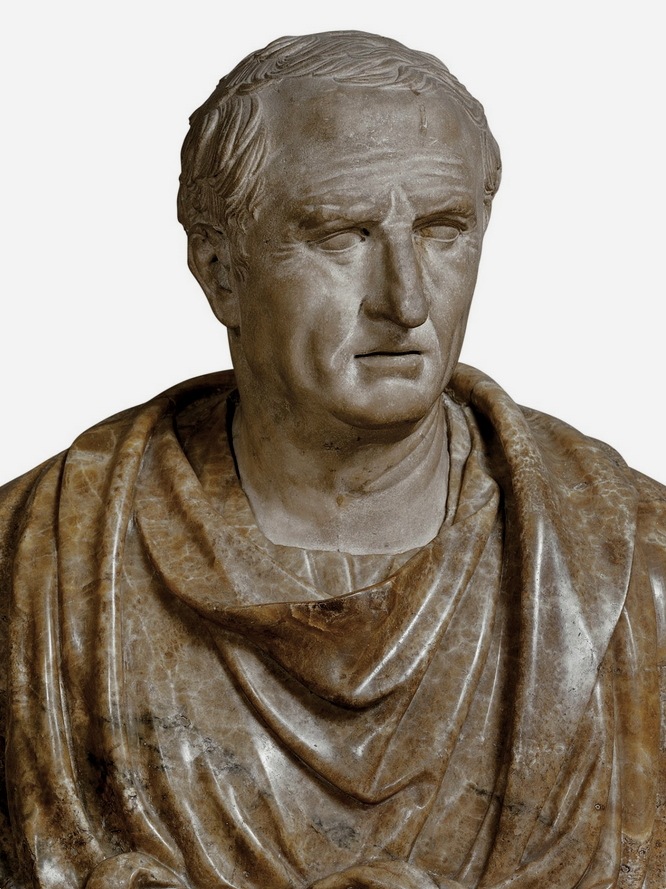
Facts about Cicero
Cicero Biography
Cicero was the greatest speaker among the many famous statesmen of ancient Rome.
Cicero practiced law and studied philosophy in Greece before holding a rising sequence of important jobs in the Roman Empire. In 64 BCE he became Consul, the highest office in Rome.
As Consul he won fame for his orations against Cataline, the head of a secret conspiracy to seize the government.
Always a staunch supporter of the Republic, Cicero was eventually forced from office by his enemies, and when Julius Caesar consolidated his power in 48 BC, Cicero went into political retirement.
During this time he wrote his famous essays on happiness, on old age, and on friendship.
Upon Caesar’s assassination in 44 BCE, Cicero returned to public life and delivered a series of scathing speeches (the “Phillipics”) against Marc Antony.
This proved to be Cicero’s undoing: when Antony took power in a triumvirate with Octavian and Marcus Lepidus, Cicero was declared an outlaw and killed by Antony’s men in 43 BCE.
Extra credit
After Cicero’s death, his head and right hand were taken to Antony, who had them placed on public view on the rostrum where Cicero had made many of his famous speeches.