
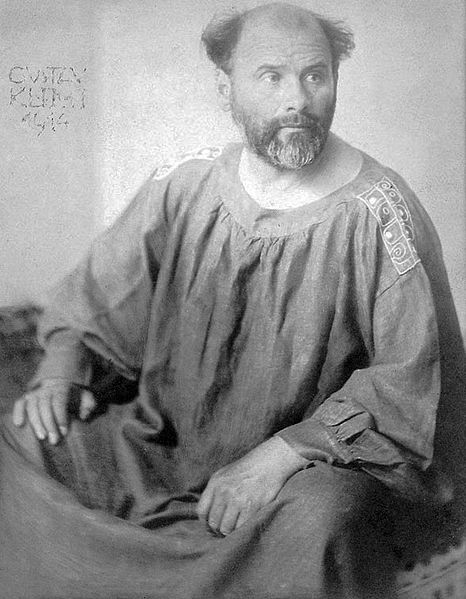
Facts about Gustav Klimt
Gustav Klimt Biography
Artist Gustav Klimt, like composer Gustav Mahler, philosopher Ludwig Wittgenstein and big-time thinker Sigmund Freud, was a hotshot of Vienna’s glory days at the turn of the 20th century.
Influenced by Impressionism, Symbolism and Art Nouveau, Gustav Klimt founded the Vienna Secession (1898), an avant-garde art movement that included a broad base of artisans and craftsmen as well as painters. Klimt himself was known more for elaborate graphic schemes than “painterly” work — his most famous piece, The Kiss (1908), shows his distinctive gold-encrusted decorations over a semi-realistic portrait of an embracing couple.
He used the framework of myth and allegory and he painted women, in ornate portraits and erotic exposures that were scandalous by Victorian-era standards. He also had time for more than painting — after his death he was credited with as many as 14 illegitimate children. (The Kiss is said to be an image of Klimt with his model and longtime lover, Emilie Flöge.)
Gustav Klimt was a big influence on the decorative arts in Austria. His other most famous paintings include Salome (1901, also known as Judith and the Head of Holofernes) Adele Bloch-Bauer I (1907, also known as Golden Adele) and Hygeia (1907, detail from Medicine).
Extra credit
Gustav Klimt was played by actor John Malkovich in the 2006 biopic Klimt.
Related Biographies
Something in Common with Gustav Klimt
- Cancer Artists (13)
- Cancer Models and Artists (21)