
They took the oath — but didn’t finish their terms.
Once you take the solemn oath of office as Vice President of the United States, there are only three ways to get out of the job: die, resign or… become the president. Here are the stories of those men who stood “a heartbeat away” for less than their full terms.

GEORGE CLINTON had served as Thomas Jefferson‘s vice president and was in his 70s when he took the same office under President James Madison in 1809. Clinton didn’t last out that term: he died in office in 1812.
Clinton was replaced by Massachusetts Governor ELBRIDGE GERRY. Gerry’s name spawned a political term that has outlasted any accomplishments the man ever had: when a map showing a re-shaping of Massachusetts legislative districts was said to look like a salamander, the term “gerrymander” was coined, supposedly by famous portrait artist Gilbert Stuart. (Although Governor Gerry initially opposed the redistricting scheme, he eventually signed the bill and has forever been associated with it.) Gerry was at the end of his career when he went to Washington, an old and feeble man who’d been chosen to balance the presidential ticket. Like Clinton, he wasn’t able to serve his full term under Madison. He died after only 20 months in office, on November 23, 1814.
(Portrait of George Clinton by Ezra Ames, 1814. Now in the collection of the New York Historical Society.)

South Carolinian JOHN C. CALHOUN was vice president under President John Quincy Adams from 1825 to 1829. He then served in the same post under ANDREW JACKSON during Jackson’s first term, from 1829 to 1832. (Calhoun and George Clinton were the only two men ever to serve as vice president under two different presidents.)
Calhoun and Jackson fought over states’ rights issues, however, and at the national convention of the Democratic Party in 1832, Martin Van Buren was picked to be Jackson’s new running mate. After Jackson and Van Buren won the election, Calhoun resigned on December 28, 1832, having been elected to the U.S. Senate from South Carolina on December 12th to fill the vacancy created by the resignation of Robert Y. Hayne. Calhoun ended up serving in the U. S. Senate until 1843, when he resigned to serve briefly as Secretary of State under President John Tyler. He returned to the Senate in 1845 and died in office in 1850.
(Daguerrotype of John C. Calhoun, circa 1850. Photographer unknown. Image from the Prints and Photographs Division of the U.S. Library of Congress. LC-USZ62-76296)

President JOHN TYLER started out as vice president under WILLIAM HENRY HARRISON. (Their campaign slogan was the famous ‘Tippecanoe and Tyler Too’ — Harrison had been a hero at the Battle of Tippecanoe Creek in 1811.) Harrison contracted pneumonia at his inauguration and died a month later, becoming the first American president to die in office. At the time, no provision for actual succession had been created. The Constitution stated that the vice president would assume the duties of the president in such a case, but it didn’t explicitly say the vice president would become the actual new president. Tyler set a precedent: he assumed the duties of the presidency and became the de facto president, taking office April 6, 1841 and serving until March 3, 1845.
(Photo of President John Tyler by Matthew Brady, circa 1860. Image from the U.S. Library of Congress, Prints and Photographs Division. LC-USZ62-13010.)

President ZACHARY TAYLOR took the oath of office March 5, 1849, with MILLARD FILLMORE as vice president. Taylor died in office rather suddenly on July 9, 1850 and Fillmore was sworn in as president the next day. Fillmore served out the term as president through 1853. He couldn’t win the job in his own right in the elections of 1852, and then was beaten again in 1856.

WILLIAM RUFUS de VANE KING (b. 7 April 1786) had been a Congressman from North Carolina, a senator from Alabama and the American Minister to France before becoming the vice president under FRANKLIN PIERCE in 1853. By a special act of Congress, King took the oath of office at the U. S. consulate in Havana, Cuba on March 4, 1853, the date that Pierce was inaugurated in Washington. King had gone to Cuba for his health, and soon afterward he returned to his plantation in Alabama, known as ‘King’s Bend.’ He died there on April 18, 1853, six weeks after taking the oath, and before even getting the chance to preside over the Senate.
(Image of William R. King published by N. Currier on or about 1852, the year King was nominated for vice president. From the U.S. Library of Congress, Prints and Photographs Division, LC-USZC2-3179.)

One of the more famous men to hold the post of Vice President was ANDREW JOHNSON, a former U. S. senator and military governor of Tennessee. When ABRAHAM LINCOLNwas assassinated on April 15, 1865, Johnson took the office of president, after a mere six weeks as vice president. (Six weeks: shades of William de Vane King!) Johnson served out the full term, stepping down in 1869, but he was famously impeached, tried and acquitted by the Senate in 1868. In 1875 the former president was elected to the U. S. Senate once again, serving alongside 14 senators who had participated in his trial (12 of whom had voted against him).
(Photo of Andrew Johnson, taken sometime between 1855 and 1865, from the U.S. Library of Congress Prints and Photographs Division. LC-USZ62-13017.)

President ULYSSES S. GRANT‘s second vice president was HENRY WILSON. Wilson was born on 16 February 1812 as Jeremiah Jones Colbath; he changed his name when he was 21.) Wilson was a U. S. senator from Massachusetts (1855-73) and one of the founders of the Republican party. He was sworn in as vice president in March of 1873, and two short months later, in May of 1873, Wilson suffered a stroke. Though he was partially disabled, Wilson recovered enough to revive his presidential ambitions, and in 1875 he began making plans to run for the Republican nomination in 1876. In November his health took a turn for the worse, and he died on November 22, 1875, a bit less than 16 months before the end of his term.
(Photo of Henry Wilson by Matthew Brady, taken between 1860 and 1875. Image from the U.S. Library of Congress, Prints and Photographs Division. Digital ID number LC-DIG-cwpbh-00671.)

CHESTER ALAN ARTHUR was the second vice president to succeed to the White House after the assassination of a president. Arthur and President JAMES GARFIELD and took their oaths of office on March 4, 1881. On July 2 of that same year, at a railway depot in Washington, D. C., Garfield was shot by Charles Julius Guiteau, a frustrated political aspirant. Garfield lived another 80 agonizing days, finally dying in New Jersey on September 19th. Arthur was sworn in as president the next day. In the end, he was vice president for six months and then president for three and a half years. In 1884 the Republican party nominated James G. Blaine instead of Arthur for president.
(Photo of Chester A. Arthur taken by C.M. Bell in 1882. Image from the U.S. Library of Congress, Prints and Photographs Division. Digital ID cph.3a53294.)

GROVER CLEVELAND succeeded Chester A. Arthur in 1884. (As it turned out, Arthur died less tjjjAlthough there was still no specific provision for replacing the vice president, ihan two years later.) Cleveland’s vice president was THOMAS ANDREWS HENDRICKS of Indiana (b. 7 September 1819), a former Congressman, senator and governor.
Hendricks died in his sleep on November 25, 1885, a little more than eight months after taking office. For the next three years the United States had no vice president, which led to chatter and arguments about presidential succession. Way back in 1792 the Presidential Succession Act provided that after the vice president, the Senate president pro tempore and the Speaker of the House of Representatives (in that order) should be next in line for the top job. That was before the emergence of political parties. With the vice presidency vacant, a popularly-elected president who died in office could very well be succeeded by a member of the opposition party, and that didn’t seem right. So in 1886 the succession law was changed so that cabinet officers got first dibs over members of Congress, a system that lasted until 1948.(1884 campaign poster for Grover Cleveland and Thomas Hendricks. Created by S.S. Frizzell and published by J.H. Bufford’s Sons. Image from the U.S. Library of Congress, Prints and Photographs Division. Digital ID LC-USZC4-5081.)

The election of 1896 paired Ohio’s WILLIAM MCKINLEY with New Jersey’s GARRET AUGUSTUS HOBART (b. 3 June 1844) as the new president and vice president. Hobart had been a successful lawyer and was very active in New Jersey Republican politics. As Vice President, Hobart cast the tie-breaking vote in the Senate against an amendment to a treaty with Spain that would have guaranteed future independence to the Philippines. Hobart died in office on 21 November 1899 at just 52 years old, leaving the United States without a vice president as it entered the 20th century. Still, Hobart is considered the first vice president who was actually involved in governing, advising McKinley on policy matters (and also helping the president with his personal investments) and actively presiding over the Senate.
(Photo of Garret Hobart taken between 1897 and 1899 by Frances B. Johnston. Now part of the Frances Benjamin Johnston collection at the U.S. Library of Congress, Prints and Photographs Division. LC-USZ62-125819)
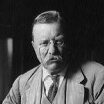
Hobart’s death left MCKINLEY without a running mate in the elections of 1900. The party chose New York Governor TEDDY ROOSEVELT, a reluctant candidate who was pushed into the position by party insiders — some say in an effort to get him out of New York. Roosevelt spent his time as vice president building up his ambition to run for president in the 1904 election. But fate intervened, in the form of Leon Czolgosz, who walked up to President McKinley on September 6, 1901 and shot him. McKinley died eight days later and Roosevelt was sworn in as president on September 14, 1901.

JAMES SCHOOLCRAFT SHERMAN (b. 24 October 1855) was a former Congressman from New York when he took the oath of office on March 4, 1909 as vice president under WILLIAM H. TAFT. Sherman was nominated by the Republicans for a second term as vice president in 1912, but Sherman died six days before the election — on October 30, 1912. Taft lost the election in any case, and Woodrow Wilson became president in 1913.
(Photo of James Sherman about 1910, from the George Bain collection in the Prints and Photographs Division of the U.S. Library of Congress. LC-USZ62-85213)

The 29th vice president of the United States, CALVIN COOLIDGE, is often contrasted with the president he served under, WARREN G. HARDING. Harding was gregarious and jovial while Coolidge was aloof and reticent, earning the nickname “Silent Cal.” Coolidge had come to national attention while governor of Massachusetts for opposing a labor strike by the Boston police in 1919. He took the oath of office as the Harding’s vice president on March 4, 1921. Two years later, on August 2, 1923, Harding died while on a trip in San Francisco, California. At around 3 a.m. on August 3, 1923, Coolidge was sworn in as president at his family home in Vermont by his father, a notary public and justice of the peace. Coolidge ran for reelection in 1924 and won, serving as president until March 3, 1929.
(Photo of Calvin Coolidge, at left, with Mrs. Coolidge and Senator Charles Curtis, on their way to the Capitol for Coolidge’s inauguration on March 4, 1925. Image from the National Photo Company Collection at the U.S. Library of Congress, Prints and Photographs Division. LC-USZ62-111326)
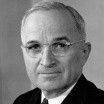
HARRY TRUMAN was vice president under FRANKLIN D. ROOSEVELT, but certainly not the first one. During Roosevelt’s first and second terms, his vice president was John Nance Garner of Texas. For his third term, in the election of 1940, Roosevelt chose as vice president Henry A. Wallace of Iowa. In the election of 1944, however, the Democrats picked Harry Truman, who at the time was a U.S. senator from Missouri. Roosevelt died suddenly on April 12, 1945, and Truman was sworn in as president. As vice president, Truman had been unaware of the work on the atomic bomb, yet within four months he was directing the military use of nuclear weapons for the first time in human history. Truman won reelection by a hair in 1948 and served until January 20, 1953.

On November 22, 1963 stunned Americans watched as LYNDON JOHNSON was sworn in as president aboard Air Force One after the assassination of President JOHN F. KENNEDY. Johnson had challenged Kennedy for the Democratic nomination in the presidential election of 1960, ultimately accepting the vice presidential nomination at the national convention. A savvy legislator from Texas (and the first U. S. congressman to enlist after World War II began), Johnson’s term as the vice president (20 January 1961 – 22 November 1963) was marked by his loyalty to Kennedy’s objectives. Easily re-elected in the election of 1964, Johnson declined to run for office again in 1968 and served as president until January 20, 1969. During his presidency the 25th Amendment to the Constitution was ratified (1967), finally clearing up the order of presidential succession, the procedures for choosing a new vice president, and confirming that the vice president assumes the office in the event of presidential incapacity.
(Image: Lyndon Johnson takes the oath of office after the death of John F. Kennedy. Photo by Cecil Stoughton. From the collection of the Lyndon B. Johnson Library and Museum. Photo ID number: 1A-1-WH63.)

The 25th Amendment, passed in 1967, ensured that in case of a vice-presidential vacancy, the president would nominate a new vice president for Congressional approval. Just in time, it turns out. RICHARD NIXON‘s running mate in 1968 and 1972 was SPIRO AGNEW of Maryland. But Agnew resigned from the vice presidency in October of 1973 after being implicated in a bribery scandal. (Agnew avoided jail by pleading no contest to charges of tax evasion.) Nixon, meanwhile, was in the middle of his own Watergate scandal.
Had there been no provision for succession, it’s possible Nixon would not have appointed a new vice president. Instead, his selection of GERALD FORD was approved by Congress (Ford had been a congressman since 1949), and when Nixon resigned on August 9, 1974, Ford became the 38th president after less than a year as vice president. President Ford ran for reelection in 1976, but lost toJimmy Carter.